
Table of Contents
ToggleIntroduction: Lighting Up Safely This Deepavali
Diwali, or Deepavali, the spectacular Festival of Lights, is truly the most anticipated time of the year across India. It’s a period when homes are scrubbed clean, decorated with twinkling fairy lights and earthen diyas, and the air is thick with the sweet aroma of homemade mithai (sweets) and savory snacks. The joyful bursts of laughter, the exchange of gifts, and the friendly neighbourhood celebrations are what make this festival so special. For many, the festive culmination is the dazzling display of fireworks, or crackers, that light up the night sky. However, beneath all the sparkle and merriment lies a yearly concern that no one wants to face: the risk of minor firework burns.
While the spirit of the festival is all about joy, the reality is that accident and emergency wards across the nation see a surge in cases during this period. The excitement, coupled with a moment of carelessness while lighting a phuljhari (sparkler), a charkhi (ground spinner), or a sutli bomb, can lead to painful injuries. It’s important to understand that cracker injuries are not just simple heat burns; the chemicals involved can sometimes cause deeper tissue damage than initially visible. The good news is that the majority of these are minor, first-degree burns, which, with the right knowledge and swift action, can be managed effectively right at home. This is where this comprehensive guide becomes your essential resource.
The primary focus of this article is to equip every Indian household with the crucial, doctor-recommended Diwali First Aid for Burns steps. We will clearly outline the immediate “Cool-Cover-Relief” protocol that can significantly reduce pain and prevent complications. We will also address a crucial “saving angle” for a safe festival. By identifying and stocking your Essential Burn First Aid Kit India before the festival rush, you not only ensure preparedness but also save yourself from the panic and potentially over-priced, last-minute purchases when an accident strikes. Our aim is simple: to make sure your Deepavali celebration is remembered for its lights and joy, not for an unexpected trip to the clinic. So, let’s dive into understanding how to handle these injuries and transform worry into readiness.
Understanding Firework Burns: When is it Minor and When is it Serious?
Recognising the type of burn is the absolute first step in burn management—it helps you decide if you can treat it with quick Cracker Burn First Aid at home or if you need to rush to the hospital. Firework burns are often different from kitchen scalds or hot plate burns because of the chemicals and explosive force involved. This means the severity can sometimes be masked, and a seemingly small injury can be deeper than it appears. Therefore, proper assessment is crucial, and knowing the difference between the three degrees of burns is a lifesaver.
The Three Degrees of Burn Severity: A Simple Guide
Medical science categorises burns based on the depth of skin tissue damage. For the purpose of Diwali First Aid for Burns, it is essential to distinguish between the superficial and the severe:
First-Degree Burns (Minor Burns)
- Damage: These are the most common injuries sustained from a stray sparkler or a brief touch from a spent cracker. They affect only the top layer of the skin, known as the epidermis.
- Symptoms: The skin will look red, be dry, and be mildly painful to the touch. There will be no blisters. A good example is a minor sunburn.
- Action: This type of burn is the main focus of our Minor Burn Relief Diwali guide. They can generally be treated safely at home with immediate cooling and simple dressings. Healing typically occurs within 3 to 6 days without scarring.
Second-Degree Burns (Partial Thickness)
- Damage: These burns penetrate the top layer of the skin (epidermis) and extend into the layer underneath (dermis). They are often caused by contact with a still-burning firework or hot debris.
- Symptoms: They are characterised by intense pain, significant swelling, and most notably, the formation of blisters. The skin underneath the blister may look red or white and wet (weeping).
- Action: While immediate cooling first aid must be applied, a second-degree burn, especially if it is large, requires professional medical attention. Do not attempt to pop the blisters, as they serve as a sterile, protective layer against infection. If the burn is larger than the injured person’s palm, seek help immediately.
Third-Degree Burns (Severe Emergency)
- Damage: These are the most severe and require emergency care. They destroy both the epidermis and the entire dermis, often extending to underlying tissue, muscle, or even bone.
- Symptoms: The area may appear white, charred black, or leathery. Paradoxically, the injured person might feel no pain because the nerve endings have been completely destroyed.
- Action: This is a life-threatening emergency. IMMEDIATE EMERGENCY MEDICAL HELP (Dial 102/108 Ambulance) is mandatory. Do not apply water, ointment, or attempt any home remedy. Cover the area with a clean, sterile cloth and wait for professional help.
When to Rush to the Hospital (Red Flags)
It is better to be safe than sorry. For any injury, especially those involving children, the elderly, or individuals with chronic conditions like diabetes, a doctor’s visit is always recommended. Always seek urgent medical care if you observe any of the following:
Red Flag Symptom | Immediate Action Required |
Location | Any burn on the face, eyes, ears, hands, feet, major joints (knees, elbows), or private parts. |
Size | A second-degree burn that is larger than the palm of the injured person’s hand. |
Severity | Any sign of a third-degree burn (charred, leathery, numb skin). |
Signs of Shock | Cold, clammy skin, weakness, rapid shallow breathing, or confusion. |
Cause | Burns from chemicals (often found in illegal crackers) or electrical sources. |
A study published in the Indian Journal of Burns often highlights that a majority of firework injuries are in the hands and face, often sustained while trying to light or relight misfired crackers. This data underscores the vital importance of recognising severity and taking timely action. Remember, early and correct Cracker Burn First Aid can prevent a minor mishap from turning into a major medical complication.
The 7 Essential First-Aid Steps for Minor Firework Burns Treatment at Home
If you’ve assessed the injury and determined it to be a First-Degree Burn (simple redness, no blisters), taking immediate, correct action is paramount. The initial few minutes are critical in limiting tissue damage and ensuring a swift recovery. This is your definitive Cracker Burn First Aid protocol, designed for quick and effective Minor Burn Relief Diwali. Following these steps precisely can be the difference between a minor inconvenience and a complicated wound.
Step 1: Cool, Cool, Cool! The Golden Rule (Jaldi Thanda Karo) 
This is the single most crucial step in any burn injury management. Heat remains trapped in the skin tissue even after contact with the fire source is broken, causing the burn to deepen.
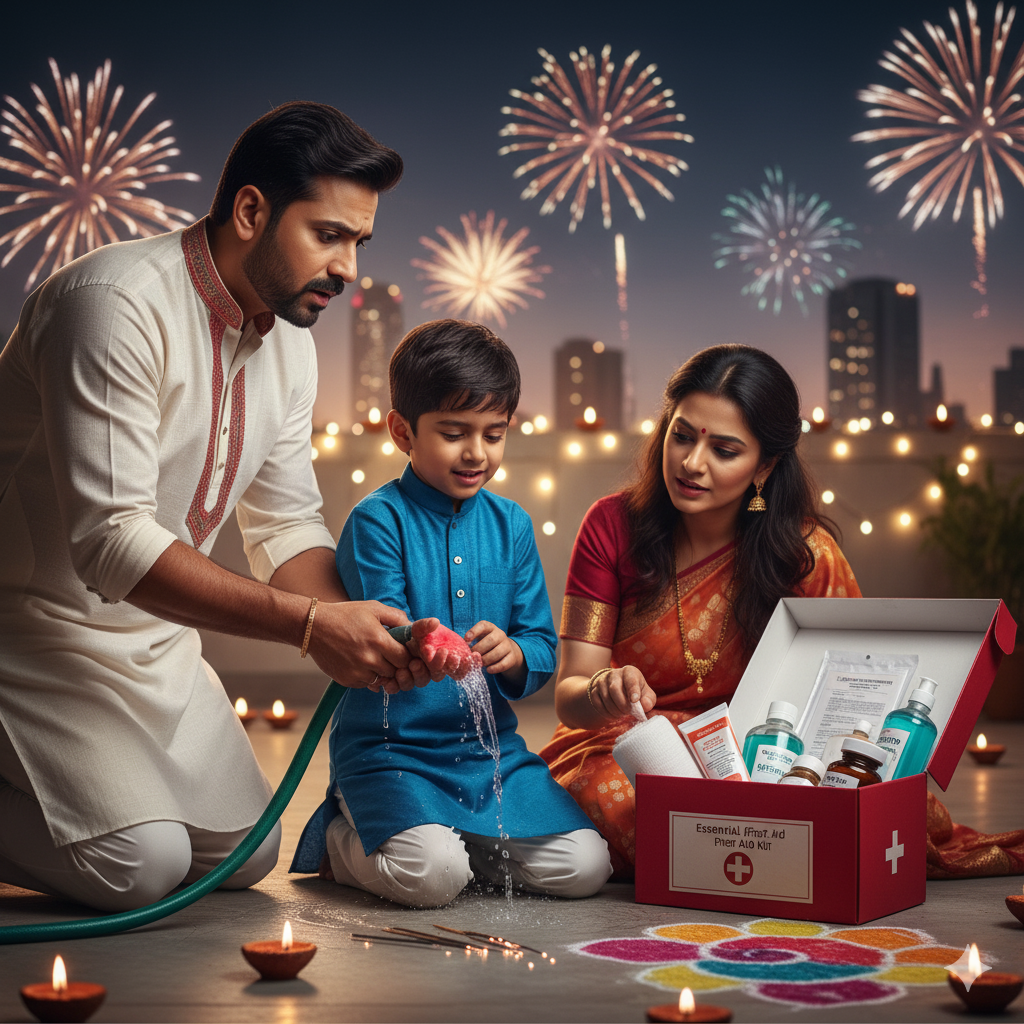
- Action: Immediately hold the burned area—a finger, hand, or arm—under cool running tap water. Do this for at least 10 to 20 minutes. The running water helps dissipate the trapped heat and provides natural pain relief.
- Crucial Don’t: The Ice Myth
- A common mistake in Indian households is applying ice or ice-cold water. DO NOT use ice or very cold water directly on the burn. Extreme cold can restrict blood flow, cause further tissue damage, and may even lead to a ‘cold burn,’ ironically worsening the injury. Cool water is the key, not freezing.
Step 2: Remove Constricting Items
Before the burn area begins to swell, which happens rapidly, you must remove anything that might restrict blood flow or become stuck.
- Action: Gently remove any rings, bangles (kangan), kada, watches, or tight clothing near the injury. Swelling will make removal difficult and painful later.
Step 3: Clean the Area Gently (A-S-K Approach)
The burn area must be kept clean to prevent infection, especially since firecrackers often leave behind carbon residue or debris.
- Action: Clean the area with a very mild, non-perfumed soap and clean water. Pat the area dry very gently with a clean, soft cloth.
- Blisters are Your Natural Bandage: If small blisters form (indicating a second-degree burn), DO NOT scrub, rub, or attempt to pop them. The blister’s fluid is sterile and acts as a natural, protective barrier against bacteria. Breaking it significantly increases the risk of infection.
Step 4: Apply a Doctor-Recommended Burn Gel or Cream
Once the area is cooled and clean, a medicinal application is necessary to soothe the pain and prevent microbial growth.
- Action: Apply a thin layer of a specialised antiseptic or analgesic burn preparation (e.g., Easy to Identify Product Name Burn Gel/Cream) specifically designed for burns.
- Benefit: These gels often contain ingredients that provide a cooling sensation and anti-infective agents like Chlorhexidine Gluconate and Silver Nitrate, speeding up the healing process.
Comparison: Correct vs. Incorrect Application |
|
Allows the skin to breathe. |
Provides an anti-septic barrier. |
Step 5: Cover and Protect the Wound (Bandage ka Suraksha Kavach)
Covering a minor burn is vital to shield it from dust, debris, and infection, particularly important during the busy, outdoor Diwali activities.
- Action: Cover the burn loosely with a sterile, non-adhesive gauze pad (e.g., Easy to Identify Product Name Gauze) or a clean plastic wrap (cling film style). The dressing should protect the burn without sticking to it or applying pressure.
- Why Gauze is Better than Cotton: Avoid using cotton wool directly on the wound. Cotton fibres can adhere to the raw burn tissue, causing irritation when removed and significantly increasing the risk of infection. Use only sterile, non-fluffy gauze.
Step 6: Manage Pain and Swelling
Even a minor burn can be surprisingly painful, especially in the first few hours.
- Action: Over-the-counter pain relievers (like Paracetamol or Ibuprofen—e.g., Easy to Identify Product Name Pain Relievers) can be taken as per the dosage instructions on the packet to manage discomfort.
- Action: If the injury is on a limb (hand or foot), elevate it above heart level. This simple technique helps to drain excess fluid and reduce swelling.
Step 7: Monitor Closely for Infection
The healing process for a minor burn usually takes a few days. Vigilant monitoring is essential to catch any complications early.
- Action: Keep an eye on the burn for signs of infection over the next few days. These signs include:
- Increased redness or streaks extending away from the wound.
- Foul smell or discharge/pus.
- Increased pain or swelling after the initial 24 hours.
- Fever.
- If you notice any of these symptoms, consult a doctor immediately. Proper Diwali First Aid for Burns is incomplete without this crucial follow-up step.
This seven-step protocol ensures you provide the best immediate care for Minor Burn Relief Diwali, focusing on cooling, cleanliness, and protection, paving the way for a rapid and complication-free recovery.
Ditch the Desi Myths: Home Remedies to Avoid for Cracker Burn First Aid 🚫
In India, traditional wisdom often plays a significant role in home care, and for generations, families have relied on certain household items for minor injuries. However, when it comes to the complex nature of a thermal injury like a firework burn, some of the most common “desi nuskhe” (traditional remedies) can actually be counterproductive, increasing the risk of infection and worsening the damage. Correct Diwali First Aid for Burns is not just about what you do, but critically, what you must avoid.
Medical professionals are unanimous on this: the goal of immediate burn treatment is to cool the tissue and keep the wound clean and sterile. Unfortunately, many popular home remedies do the exact opposite—they trap heat and introduce contamination. Let’s definitively debunk the most popular, yet dangerous, myths about Cracker Burn First Aid:
Why Toothpaste is NOT First Aid: The Biggest Myth 🦷
This is arguably the most common mistake made across India for minor burns. People often reach for mint toothpaste because of the initial cooling sensation it provides.
The Danger: Toothpaste is not sterile. It contains various chemicals, perfumes, and colouring agents that can irritate the burn tissue and introduce bacteria directly into the wound, leading to a severe infection. Moreover, its thick consistency acts as an insulator, trapping the heat inside the skin and prolonging the burning process, which causes deeper damage.
Medical Fact: Doctors state that toothpaste residues can make it difficult for medical professionals to properly assess and clean the wound later, delaying the correct treatment.
Butter, Oil, and Ghee: The Heat Trappers
Applying cooking oil, butter, or even traditional ghee (clarified butter) is another widely practised but harmful home remedy.
The Danger: Like toothpaste, these greasy substances create a thick, non-breathable layer over the burn. Fats are insulators, meaning they seal the heat in the skin, which continues to cook the underlying tissue. This significantly increases the severity of the burn and the risk of scarring. Furthermore, these products are not sterile and can introduce Clostridium bacteria, leading to further complications.
Turmeric (Haldi) and Raw Potato: Cleanliness Concerns
While Haldi is revered in Ayurveda for its antiseptic properties (containing curcumin), applying raw turmeric powder directly to a fresh, open burn is ill-advised. Similarly, raw potato slices are a common fix, believed to prevent blistering.
The Danger: While the theory is sound, the practice is risky. The raw, kitchen-grade turmeric powder is not sterilised and can be a source of contamination. The same applies to raw potatoes. For a sensitive, open burn, it is essential to use sterile, medically approved antiseptic creams and gels that leverage active agents in a clean, controlled formulation.
The Official NO-GO List for Minor Burn Relief Diwali
To ensure safe and effective Minor Burn Relief Diwali, remember to apply the correct “Cool-Cover-Relief” protocol and strictly avoid these items:
Household Item | Why It Must Be Avoided |
Ice/Iced Water | Causes ‘cold burn,’ damaging tissue and restricting blood flow (vasoconstriction). |
Toothpaste | Traps heat, introduces bacteria, and contains harsh irritants/chemicals. |
Butter/Ghee/Oil | Insulates the burn, trapping heat and causing the injury to deepen. |
Turmeric Powder | Not sterile; can contaminate the raw wound. |
Raw Cotton Wool | Fibres can stick to the wound, causing pain and infection upon removal. |
Powders (Flour/Chalk) | Mixes with natural secretions to form a paste, trapping heat and increasing infection risk. |
The best, universally accepted, and scientifically backed Cracker Burn First Aid remains: Cool running water for 10-20 minutes, followed by a sterile, specialised burn dressing. Don’t let well-meaning myths worsen a minor injury this festive season.
The Eye is Priceless: Protecting Vision from Firecracker Fallout
Beyond burns, the most devastating injuries during Diwali are often sustained by the eyes. Firecracker debris, sparks, and chemical powders fly at high velocity, leading to a surge in ocular trauma cases every year. It’s a tragic irony that the festival of light often results in vision loss. Experts note that approximately 40% to 50% of all firework-related injuries affect the eyes, and a significant portion of these involve innocent bystanders who were not even lighting the crackers themselves.
The Silent Threat: Types of Ocular Injuries
Firecrackers can cause a range of injuries, from minor irritation to permanent blindness. Understanding the severity helps emphasize the need for immediate, correct action.
- Chemical Burns: This occurs when the alkaline powder from firecrackers, such as lime powder, enters the eye. These are particularly dangerous because they continue to damage the eye tissue long after contact.
- Blunt Trauma: Injuries caused by a direct, non-penetrating impact from a cracker or rocket hitting the eye. This can cause hyphema (bleeding inside the front of the eye) or even retinal detachment.
- Penetrating Injuries: The most severe type, often caused by sharp shrapnel or debris from an exploding firework. This can rupture the eyeball and frequently leads to irreversible vision loss.
- Corneal Abrasion: A scratch on the eye’s surface, often caused by ash or tiny particles that are rubbed into the eye.
The Immediate Eye Injury Protocol: DOs and DON’Ts
When an eye injury occurs, panic often sets in, leading to harmful actions. Ophthalmologists stress that the first few minutes are critical for salvaging vision. Dr. Pallavi Joshi, a Senior Consultant in Cornea Services, advises, “In case of any firecracker-related eye injury, your primary goal is to protect the eyeball and get professional help. Home remedies and rubbing the eye are the worst things you can do.”
Immediate Eye First Aid: The DON’Ts | Immediate Eye First Aid: The DOs |
❌ DO NOT RUB THE EYE! | ✅ RINSE IMMEDIATELY with clean, running water or saline solution for 15-20 minutes if ash or chemicals enter the eye. |
❌ DO NOT WASH or splash water if there is a blast injury (a deep cut or visible foreign object). | ✅ GENTLY COVER the injured eye with a clean cloth or a sterile eye pad/shield. Do not apply pressure. |
❌ DO NOT attempt to remove any foreign object that is visibly stuck or embedded in the eye. | ✅ KEEP THE HEAD STABLE and ensure the patient avoids any vigorous activity that could increase pressure on the eye. |
❌ DO NOT apply ghee, oil, or any home remedies—they introduce infection and complicate surgery. | ✅ RUSH the patient to the nearest eye trauma center or ophthalmologist immediately. |
Data Spotlight: Who is at Risk?
Data from hospital emergency rooms consistently show that children are disproportionately affected by firecracker injuries.
- A review of firecracker eye injuries showed that approximately 60% of victims were under the age of 16.
- The most common culprits for serious eye damage are rockets and flower pots (anar), which propel debris or chemical ash at dangerous speeds.
Safety isn’t about eliminating fun, it’s about shifting the focus to supervised, distanced enjoyment. Wearing protective eyewear, maintaining a safe distance, and having adult supervision are non-negotiable steps to ensure the festival of light doesn’t leave behind a shadow.
Beyond Fire: Handling Other Diwali Hazards
While burns and eye injuries grab the most headlines during Diwali, the festivities introduce several other common, yet serious, hazards. From smoke inhalation to sudden cardiac events exacerbated by stress and pollution, being prepared for the full spectrum of emergencies is key to a truly safe celebration.
The Silent Killer: Smoke and Air Quality
The dramatic increase in pollution from firecrackers and bonfires creates a significant health hazard, particularly for people with existing respiratory conditions. The immediate impact of inhaling smoke and particulate matter can trigger life-threatening events.
- Fact: Air quality indexes (AQI) often spike to “Severe” categories in metropolitan areas on Diwali night, with particulate matter (PM2.5) levels soaring far above safe limits.
- Vulnerable Groups: Children, the elderly, and individuals with chronic conditions like Asthma, COPD (Chronic Obstructive Pulmonary Disease), and heart disease are at the highest risk.
Symptom of Severe Smoke Exposure | Immediate Action |
Shortness of Breath/Wheezing | Move the person immediately to a clean, indoor, air-conditioned space. Administer prescribed inhalers or nebulizer medications. |
Persistent Cough/Chest Tightness | Encourage slow, deep breathing. Provide sips of water. If symptoms worsen, seek medical help. |
Dizziness or Confusion | Could indicate low oxygen levels. Call for emergency medical help immediately. |
Pro Tip: If you have vulnerable family members, keep a well-stocked Diwali First-Aid Kit ready, including N95 masks, a prescribed inhaler/nebulizer, and a portable pulse oximeter to monitor oxygen saturation levels.
Noise, Stress, and Cardiac Events
The intense noise and general festive stress can have a detrimental effect on cardiovascular health, especially for older adults. The decibel levels of certain firecrackers can exceed 140 dB, comparable to a jet engine, causing physical stress and anxiety.
Case Study: A recent study examining emergency room admissions during Diwali found a notable increase in reported cases of acute coronary syndrome (heart attacks) and severe hypertension (high blood pressure) in the days immediately following the peak noise and commotion. Researchers speculate this is due to a combination of stress, disturbed sleep, and air pollution.
Immediate First Aid for Suspected Cardiac Event:
- Recognize the Signs: Chest pain, radiating pain to the arm/jaw, severe breathlessness, cold sweats.
- Act: If the person is conscious and not allergic, give them an aspirin (325mg tablet) to chew (this is a blood thinner and can slow clot formation).
- Position and Call: Help the person sit down comfortably, loosen any tight clothing, and call the emergency services immediately.
Trip and Fall Accidents
The combination of dim lighting from diyas and debris from burst crackers in the streets leads to an increased risk of falls and sprains.
“Many minor injuries we treat during Diwali are simple sprains and cuts caused by people walking over debris or slipping in crowded, poorly lit areas. Always wear closed footwear, especially when walking near firecracker areas.”
For sprains or simple fractures, remember the R.I.C.E protocol while you arrange for transport to a hospital:
- Rest: Stop using the injured limb.
- Ice: Apply a cold pack for 15-20 minutes every few hours.
- Compression: Use a bandage to lightly wrap the area.
- Elevation: Raise the injured limb above the level of the heart to reduce swelling.
By preparing for these often-overlooked hazards, your celebration can remain vibrant, joyful, and, most importantly, safe for everyone.
Conclusion: A Pledge for a Safer, Brighter Diwali
Diwali, the Festival of Lights, is a time of incredible joy, togetherness, and renewal. It marks the victory of light over darkness and good over evil. Yet, as our discussions have highlighted, the pursuit of celebration often overshadows the paramount need for safety, leading to preventable tragedies. This year, let the true light of Diwali—the light of consciousness and care—guide our actions.
The Three Pillars of a Safe Diwali
To ensure your celebration is memorable for the right reasons, we encourage you and your family to adopt this simple three-part pledge:
- Preparation is Protection: Before the first diya is lit, ensure your home is fire-safe. Keep a bucket of water and sand ready, check your first-aid kit, and discuss the emergency plan with all family members. This preparation reduces the risk of minor incidents escalating into major crises.
- Supervision is Love: Whether it’s the youngest child or the most sensitive pet, assume responsibility for the vulnerable. Strict adult supervision must accompany all firecracker activities, and a dedicated “safe space” must be created for pets and those sensitive to noise and smoke. Remember the statistic: 60% of firecracker eye injuries affect children—a figure adult vigilance can drastically reduce.
- Mindfulness is Celebration: True celebration should not come at the cost of pollution, noise, or pain. By choosing eco-friendly options, sticking to time restrictions, and being considerate of neighbours, the elderly, and stray animals, you elevate the festival beyond mere noise and display.
This year, let’s redefine the essence of the festival. Let the dazzling lights come from the beautifully arranged diyas and the sparkling sincerity in our hearts, rather than from high-decibel explosives.
Happy and Safe Diwali to you and your family from the entire MGM Team!